Jewelry Styling6 min read
Jewelry Storage Ideas That Make Everyday Pieces Easy to Find
The best jewelry storage does more than look pretty on a dresser: it helps you find the pieces you actually wear without untangling a chain or searching for an earring back. Start by grouping jewelry by shape and how often you reach for it, then give each type a place that protects it from neighboring pieces. These ideas work for a small everyday collection or a more generous assortment, and most can be adapted to the space you already have.
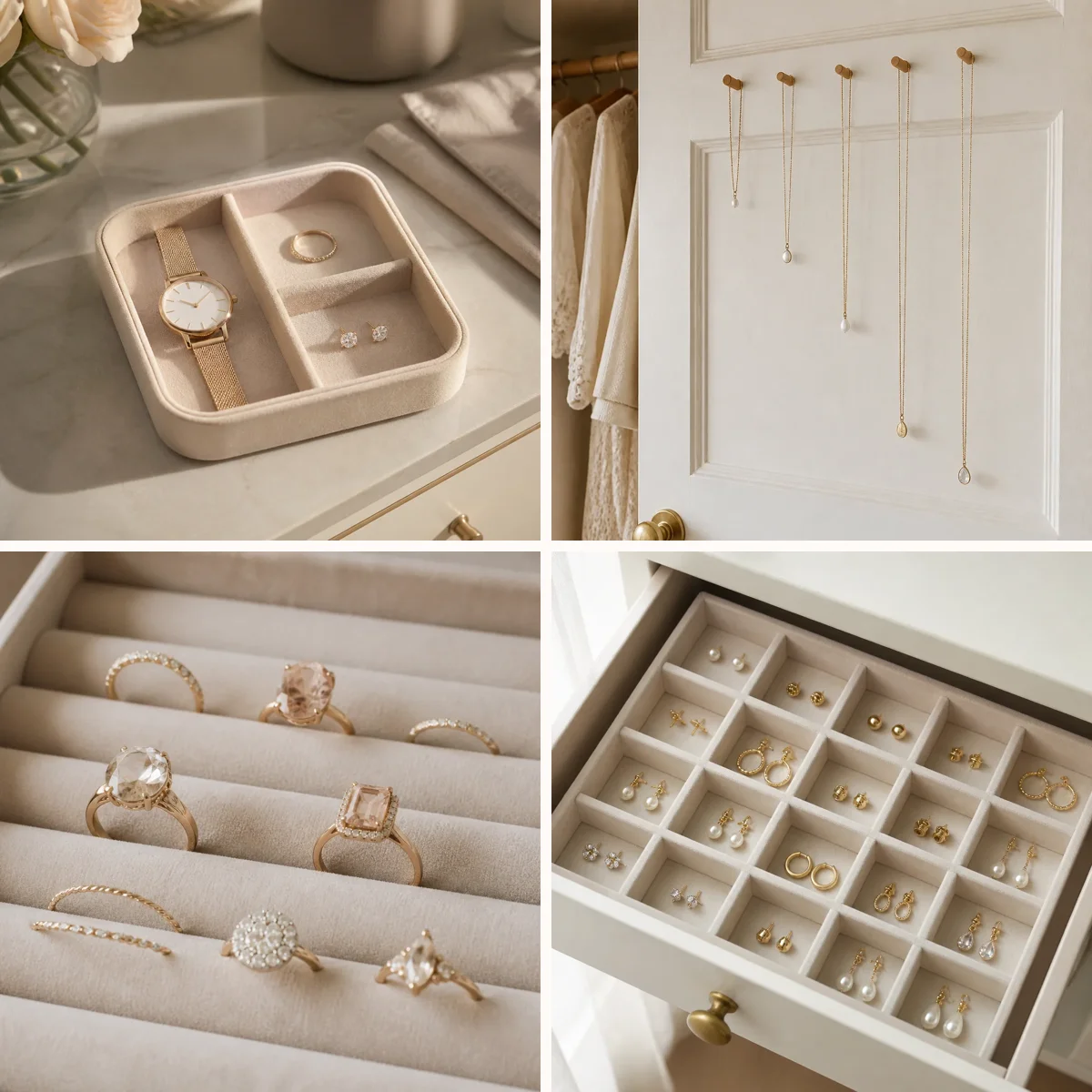

Create a Landing Spot for Daily Favorites
Choose a small tray or shallow dish for the pieces you remove every evening and put back on most mornings. Place it where that routine naturally happens, whether that is a dresser, bedside table, or bathroom-adjacent vanity. A tray with divided spaces makes it easier to keep a watch, a pair of studs, and a ring from rubbing against one another. Add a soft liner if the base is hard or rough. Keep this spot intentionally selective: a few dependable pieces are easier to see and retrieve than a heap of options. Once a week, return anything you have not worn to its longer-term home. If your jewelry is affected by moisture, choose a dry area outside the bathroom rather than leaving it near a steamy sink.
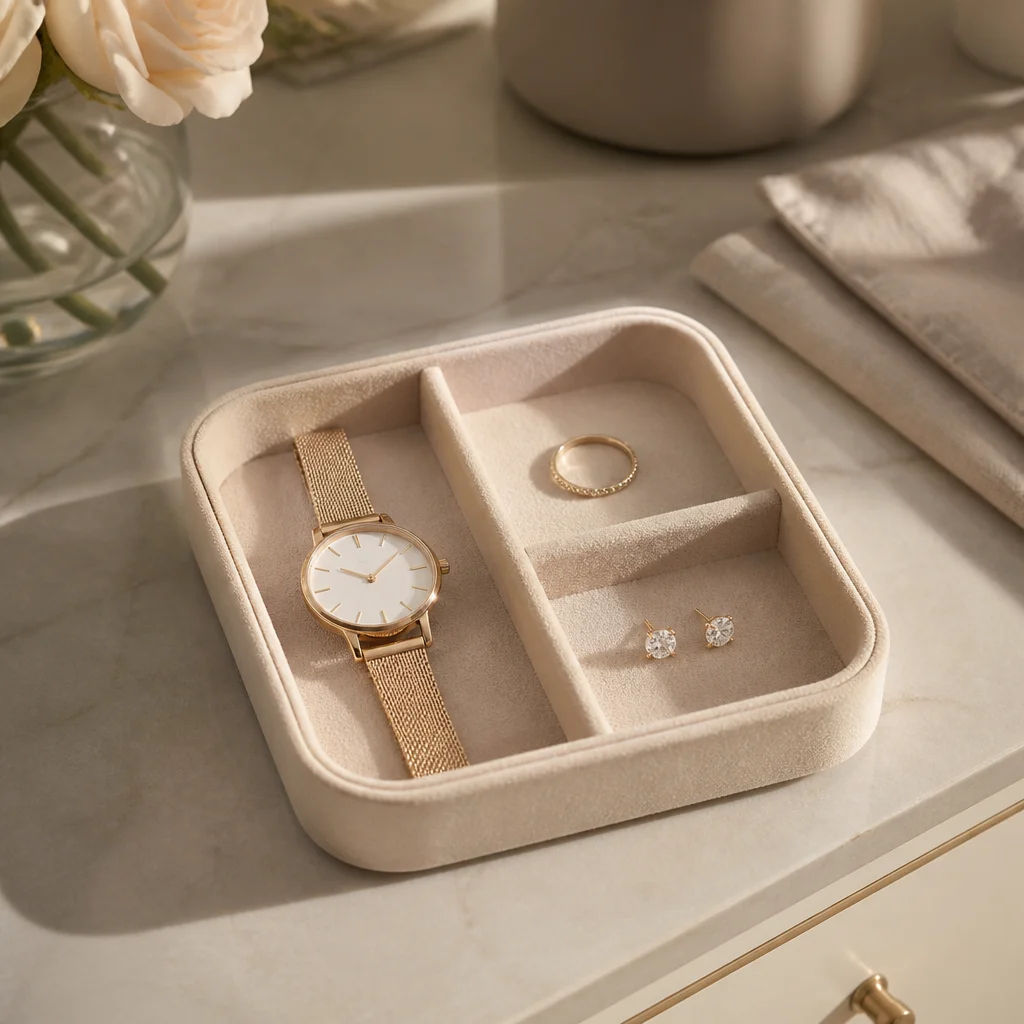
Hang Necklaces Separately to Keep Chains Tangle-Free
Give necklaces individual hooks or pegs so each chain can hang freely. A wall-mounted rail, the inside of a closet door, or a narrow standing organizer can all work, provided the hooks are far enough apart that pendants do not overlap. Fasten each clasp before hanging, and leave enough vertical clearance for the longest chain so it does not pool at the bottom. Arrange necklaces by length, then put your most-worn styles at the easiest-to-reach end. This makes choosing a layer combination quicker and helps you spot an empty hook when a piece is in use. For particularly delicate chains or pendants that could knock against a wall, use individual soft-lined compartments instead.
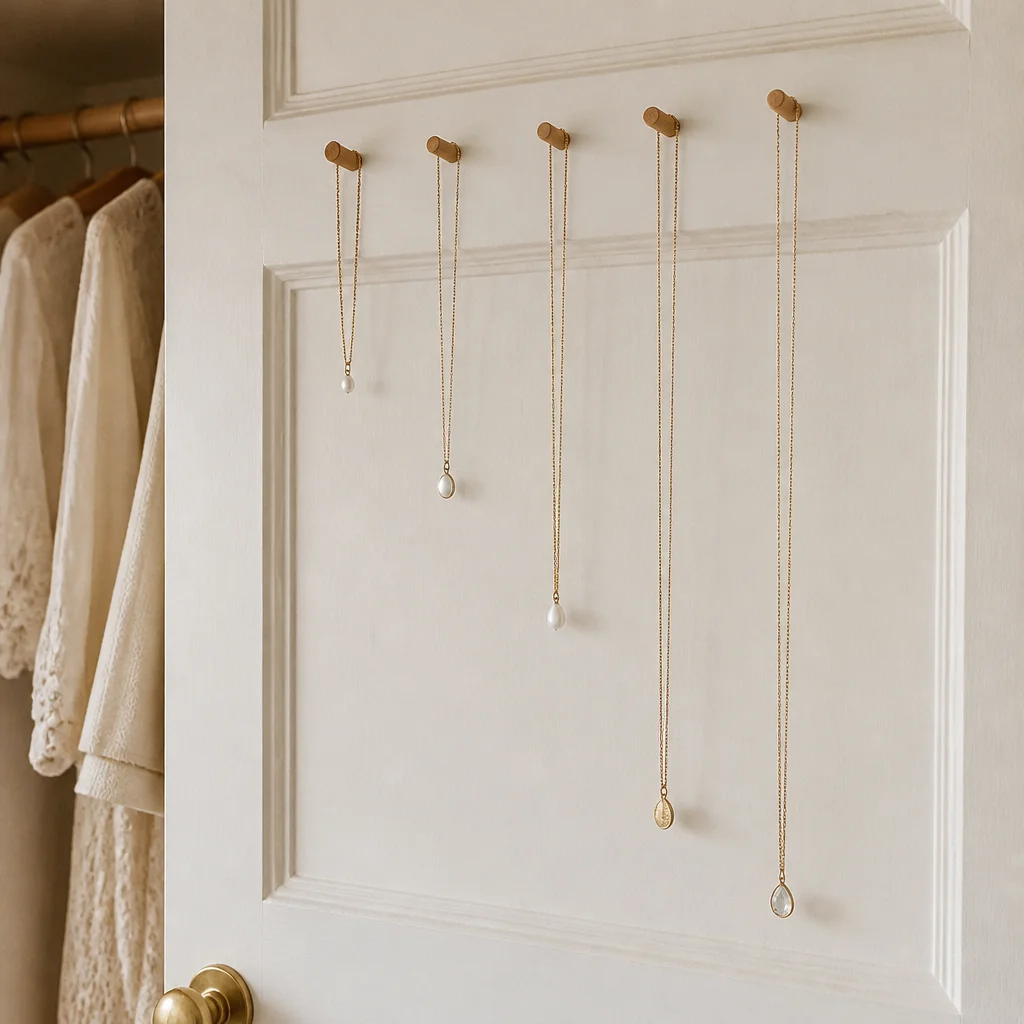
Use Ring Rolls to Keep Bands Visible
A ring roll or a tray with padded slots keeps rings upright, separated, and easy to scan. Group slim everyday bands together and give larger settings their own space, allowing enough room that stones and metal edges do not press against neighboring rings. If a ring has an unusually tall or delicate setting, place it in a separate lined compartment rather than forcing it into a tight slot. Organize by the way you get dressed: keep your regular stack together, with occasional statement rings in a second row. A small covered box can protect less frequently worn pieces from dust, while an open tray is convenient for the rings you reach for daily. Return each ring to its slot after wearing it so the arrangement stays useful.
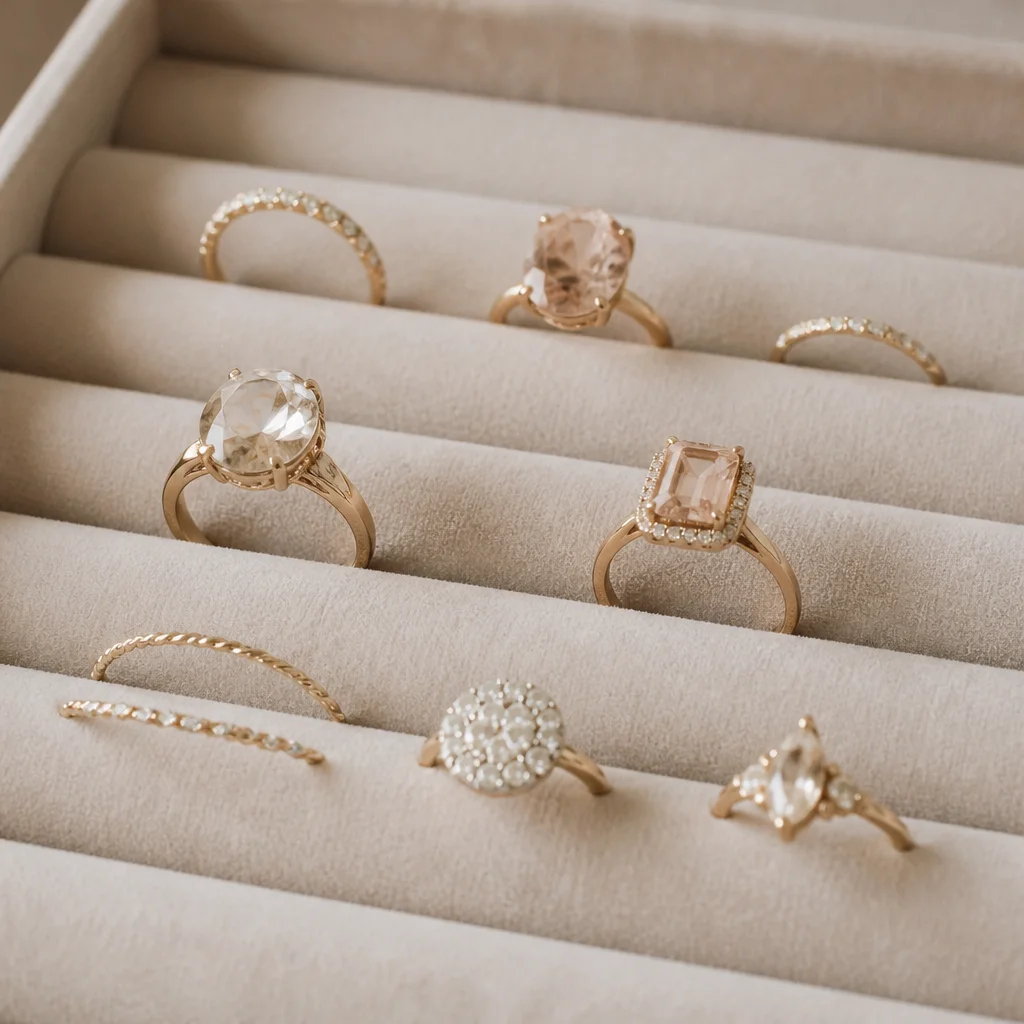
Pair Earrings in Small Compartments
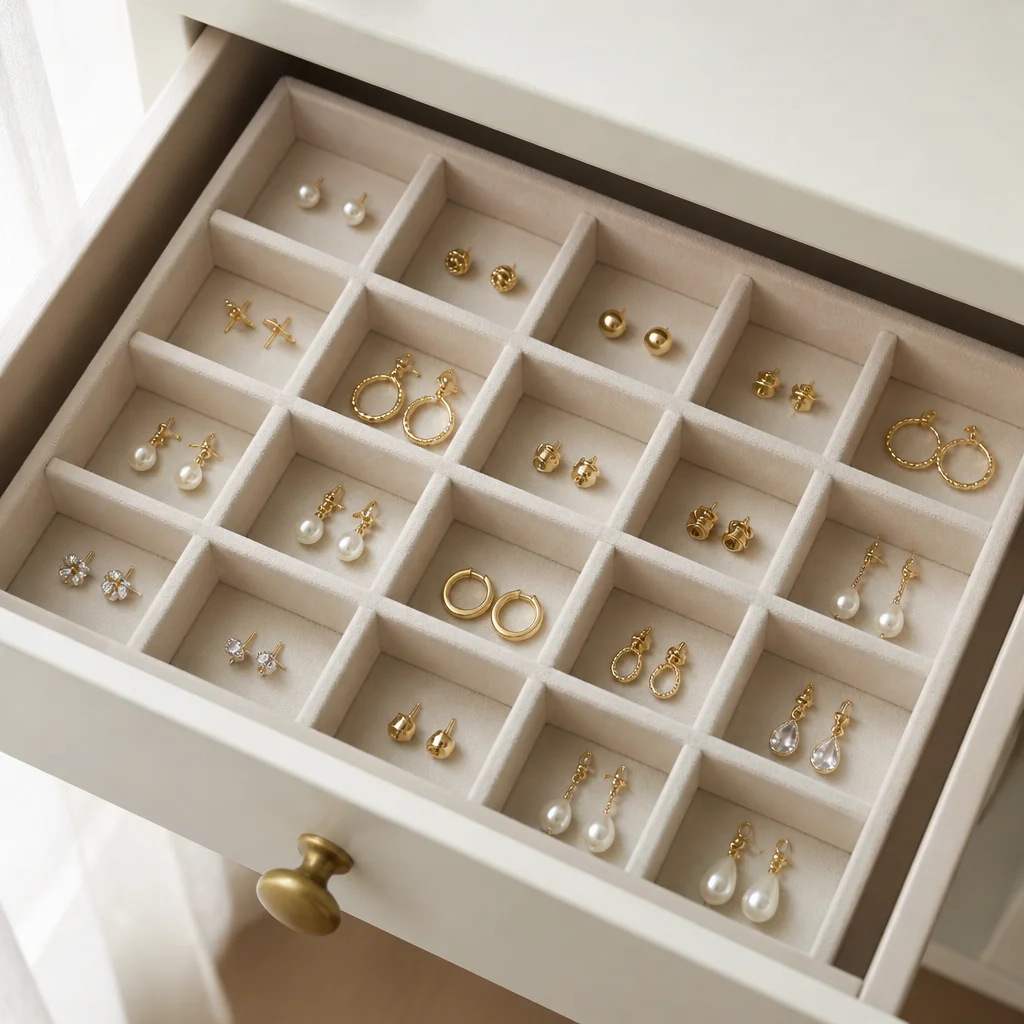
A divided tray helps keep earrings together without turning the whole collection into a jumble. Put each pair in its own compartment, including the backs, and use smaller sections for studs and larger ones for hoops or drops. Soft lining is especially helpful when finishes or stones could be scratched by contact with other pieces. Close the backs onto posts when practical so they are less likely to disappear. Sort the tray from everyday to occasional, rather than strictly by color, if speed is your priority. For example, place simple studs and small hoops near the front, with dressier earrings toward the back. If you own several similar pairs, orient them consistently so the differences in size and shape are easy to notice at a glance.
Give Bracelets Room to Lie Flat
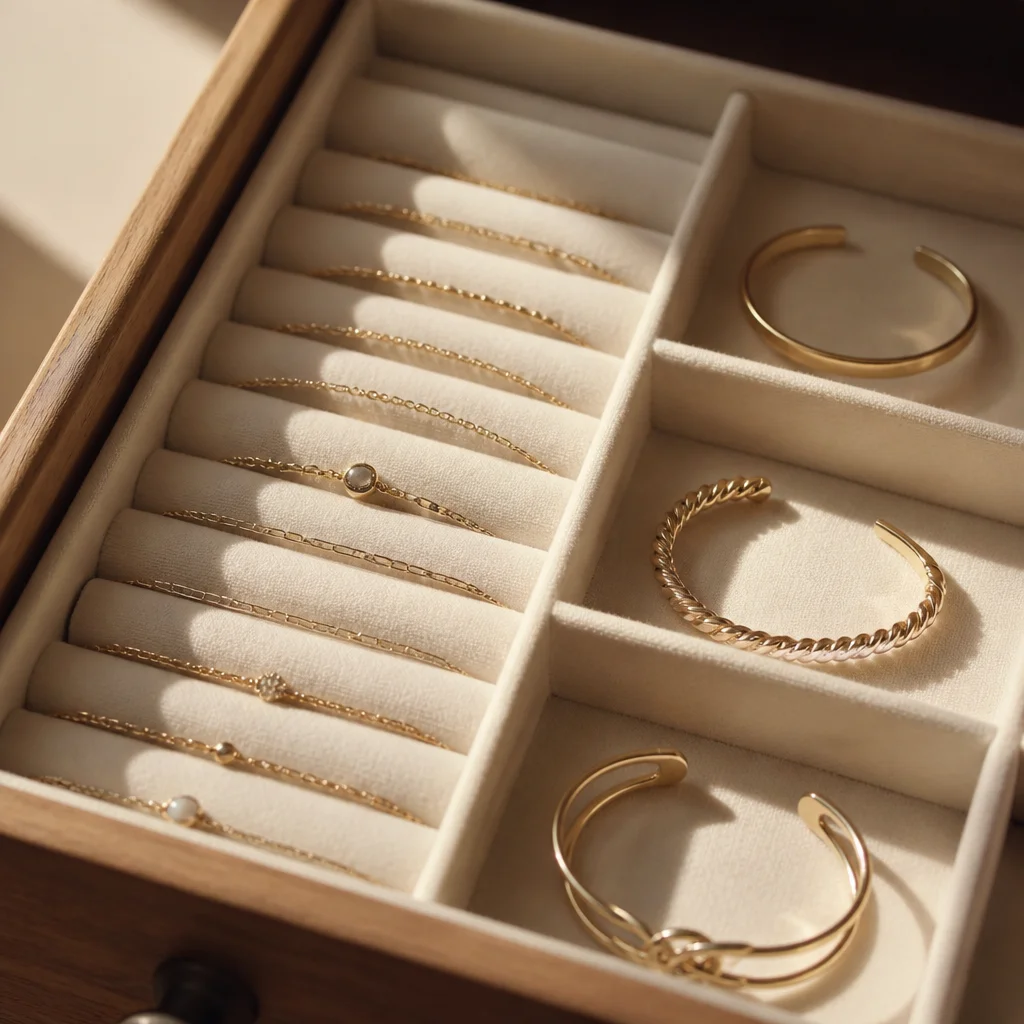
Bracelets have different storage needs depending on their shape. Flexible chains and delicate strands can lie flat in separate long, narrow compartments, with clasps fastened to reduce snagging. Rigid cuffs and bangles may fit better in wider sections, where they can rest without being squeezed or stacked against one another. A soft-lined drawer insert lets you accommodate both shapes while keeping everything visible. Place frequently worn bracelets near the front of the drawer and special-occasion pieces farther back. Before choosing an insert, measure your widest cuff and longest bracelet so the sections are genuinely useful. If a piece has a delicate charm or raised stone, give it extra space rather than tucking it beneath another bracelet.
Turn a Drawer Into a Jewelry Wardrobe
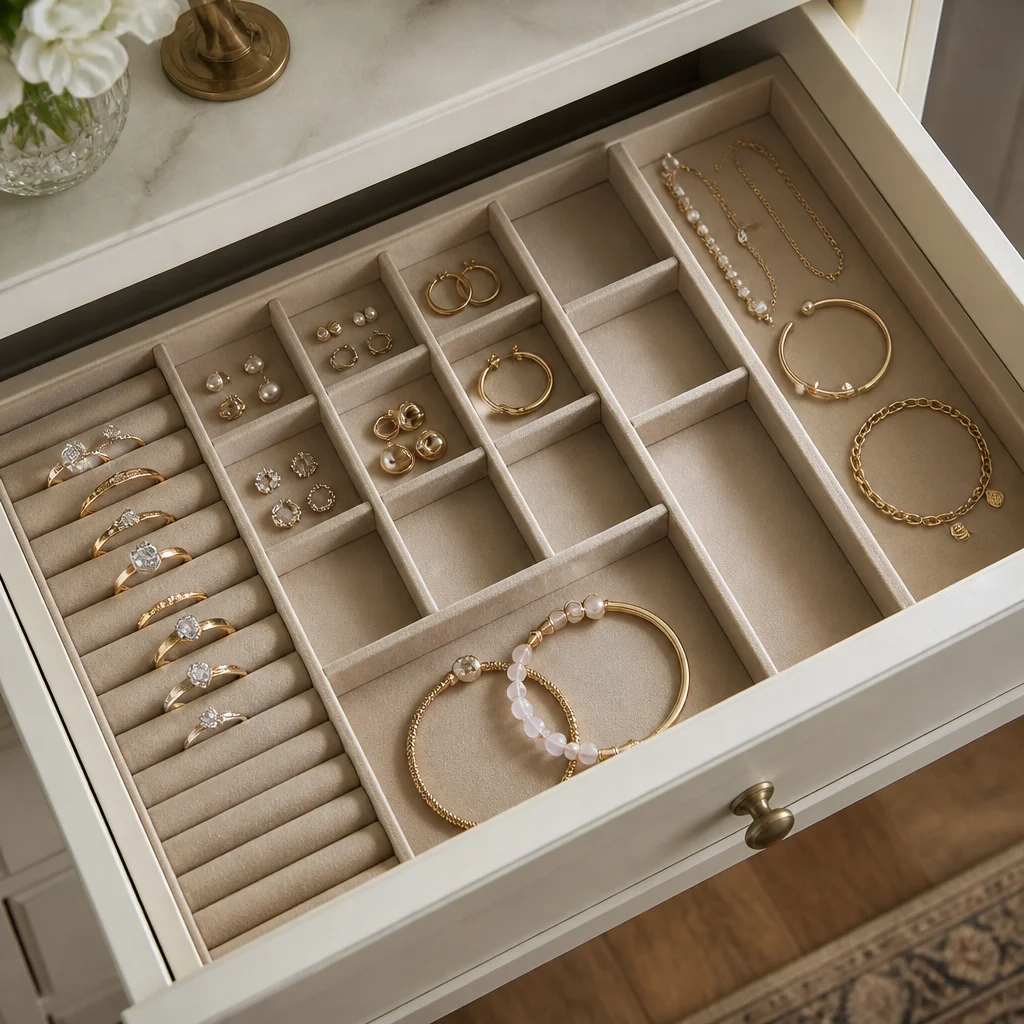
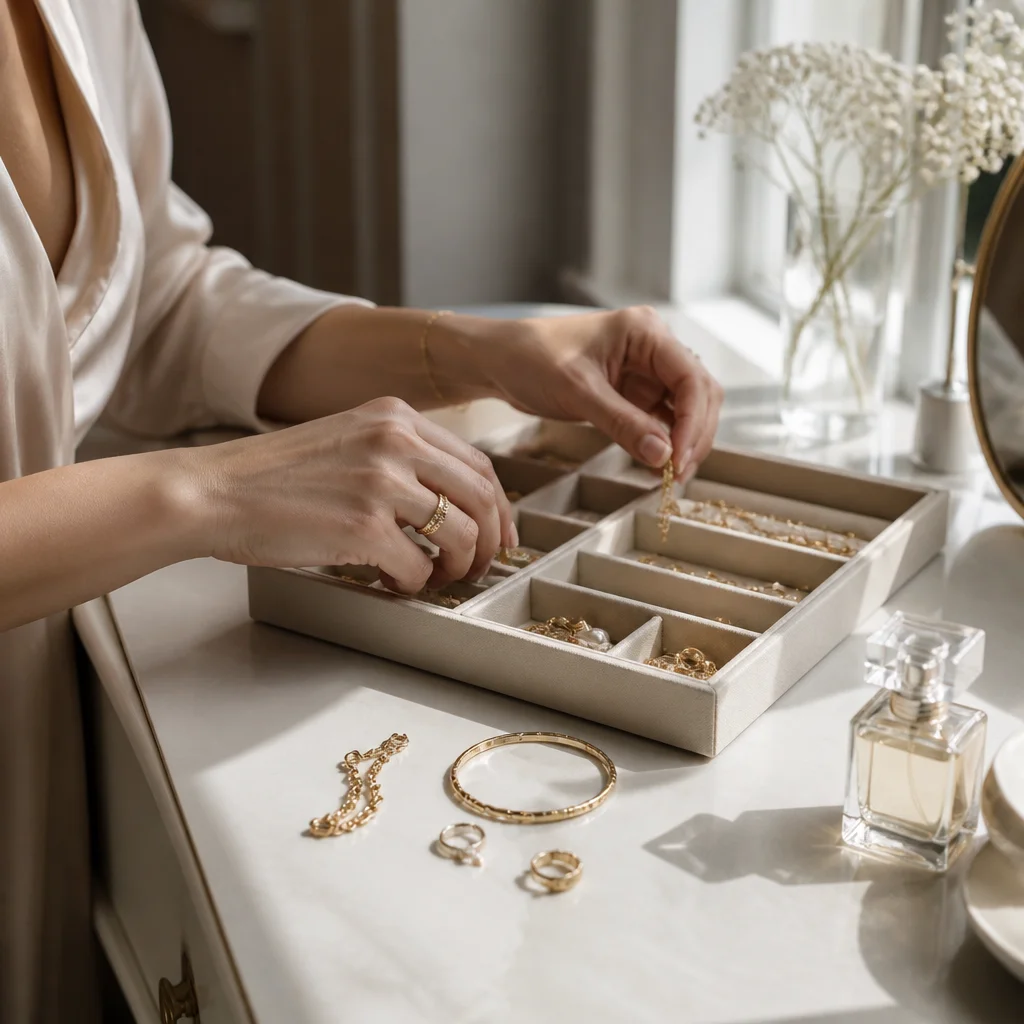
A shallow drawer can hold a surprising amount when it is fitted with inserts suited to your collection. Combine ring slots, small earring sections, and longer compartments for bracelets or chains instead of relying on one large open tray. Measure the drawer's inside width, depth, and height before selecting inserts, and leave a little clearance so the drawer opens and closes without catching. Arrange the contents according to your routine: daily pieces at the front, less-used options toward the back. Avoid filling every section immediately; a little spare capacity makes the system easier to maintain as your collection changes. Add a non-slip liner beneath loose inserts if they slide when the drawer moves, and choose a dry location away from sources of heat and moisture.
Separate Delicate and Occasional Pieces
Jewelry worn only for celebrations or with particular outfits does not need to occupy the most accessible space. Store it in a covered, soft-lined box with individual compartments, or use separate soft pouches inside a larger box. This keeps occasional pieces from being jostled during the daily search for favorites and reduces contact between items with different finishes or hard stones. Keep pairs and sets together in neighboring compartments, but avoid piling them into the same pouch. If a necklace is too long for its compartment, loosely arrange it without pulling or sharply bending it. A simple inventory kept with the box can remind you what you own, making it easier to bring a forgotten piece back into rotation.
Build a Compact Kit for Jewelry on the Go
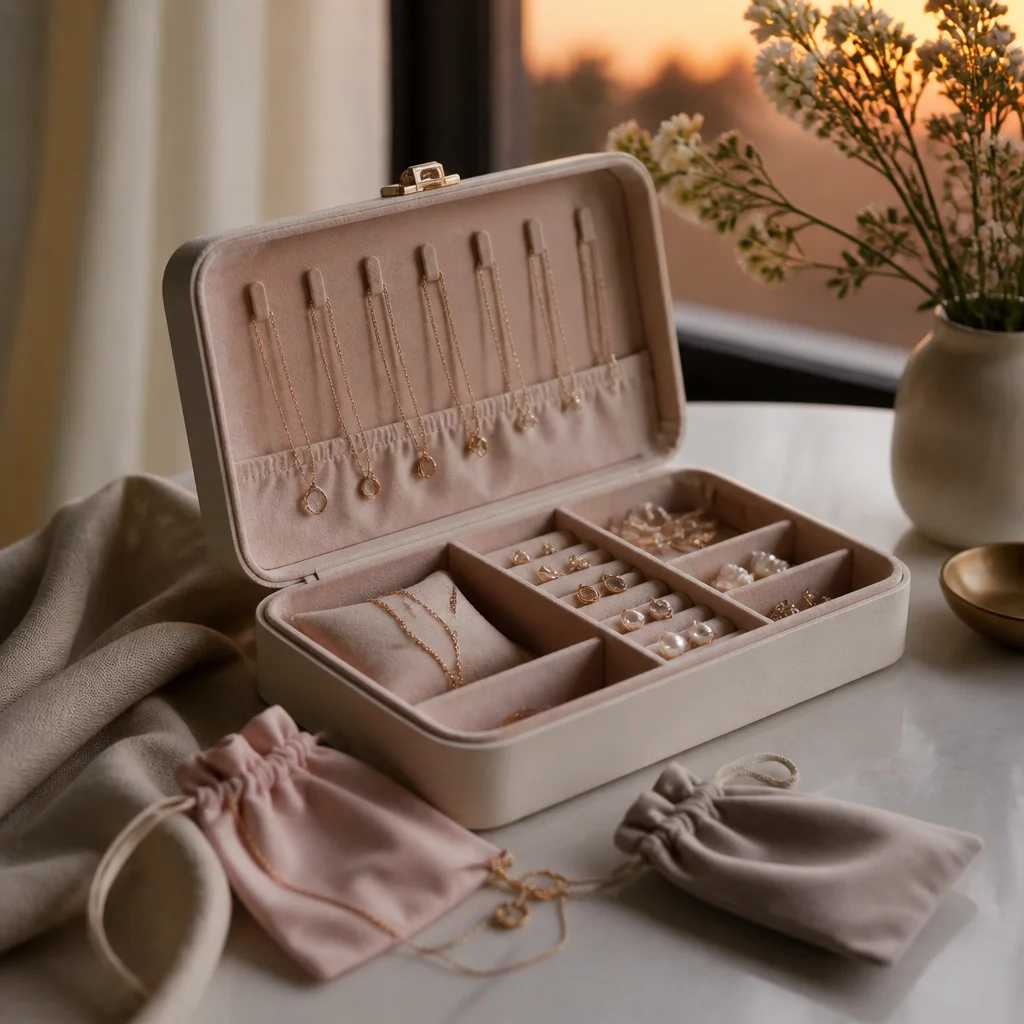
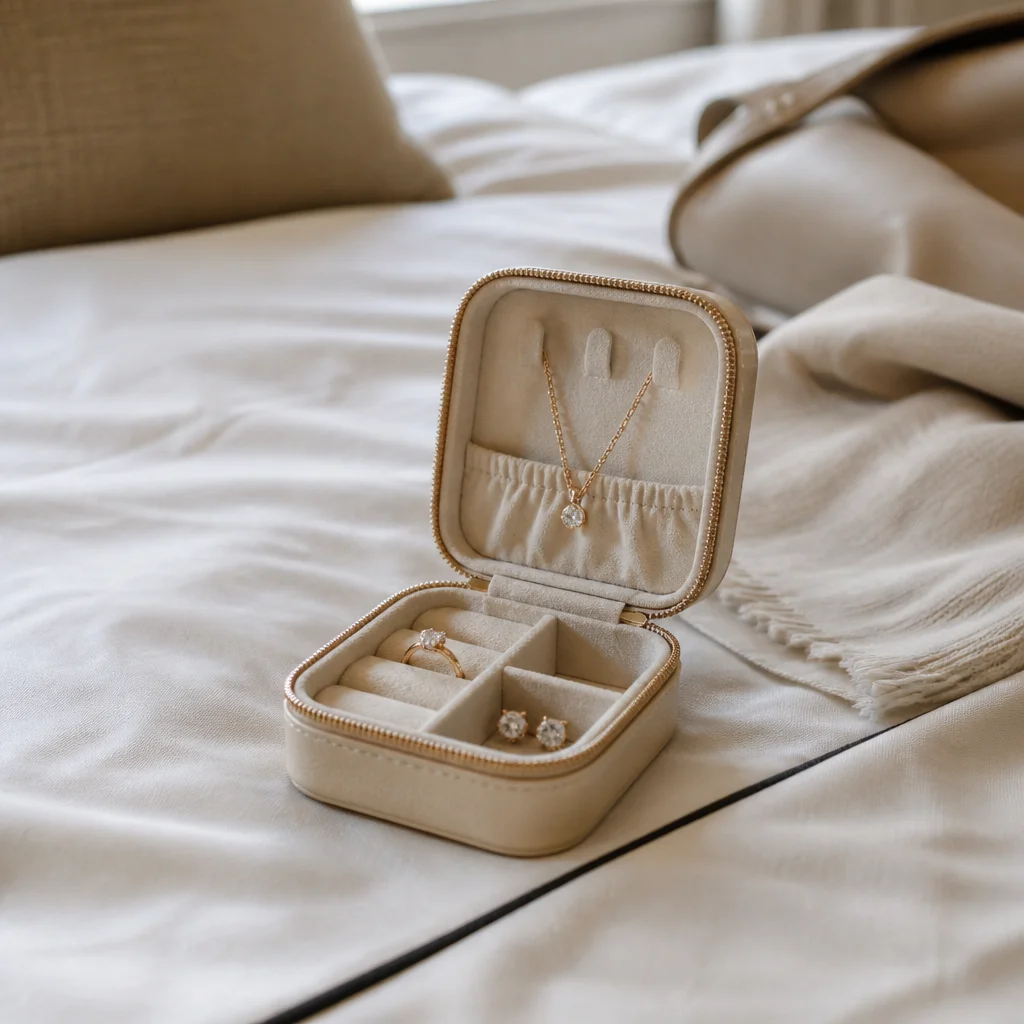
A small travel case can also be useful at home if you often change jewelry after work, at the gym, or before an evening out. Look for separate spaces that suit what you carry: a padded area for rings, small compartments for earrings, and individual sections or pouches for necklaces. Fasten chains before packing and keep each one apart so it cannot twist around another piece. Pack only the pieces you expect to wear, and check that clasps and earring backs are secure before closing the case. When you return, unpack the kit rather than letting it become a second, forgotten jewelry box. A quick reset keeps your everyday favorites in their usual places and makes the case ready for the next trip.
Make the System Easy to Maintain
Even a well-planned organizer needs a little editing. Every few months, lay out your collection and notice which pieces you wear, which need repair, and which no longer suit your style. Move current favorites into the easiest-to-reach spaces and give seldom-worn pieces a protected spot elsewhere. If one compartment is consistently overflowing, divide that category further or choose a larger insert rather than stacking items. Before putting jewelry away, follow any care guidance appropriate to its materials and make sure pieces are dry. Check clasps, earring backs, and loose settings as you handle them, setting aside anything that needs attention. The goal is a simple routine you can repeat: separate each piece, return it to its home, and leave tomorrow's choices easy to see.
How did this story make you feel?
Choose one reaction. You can change it later.
